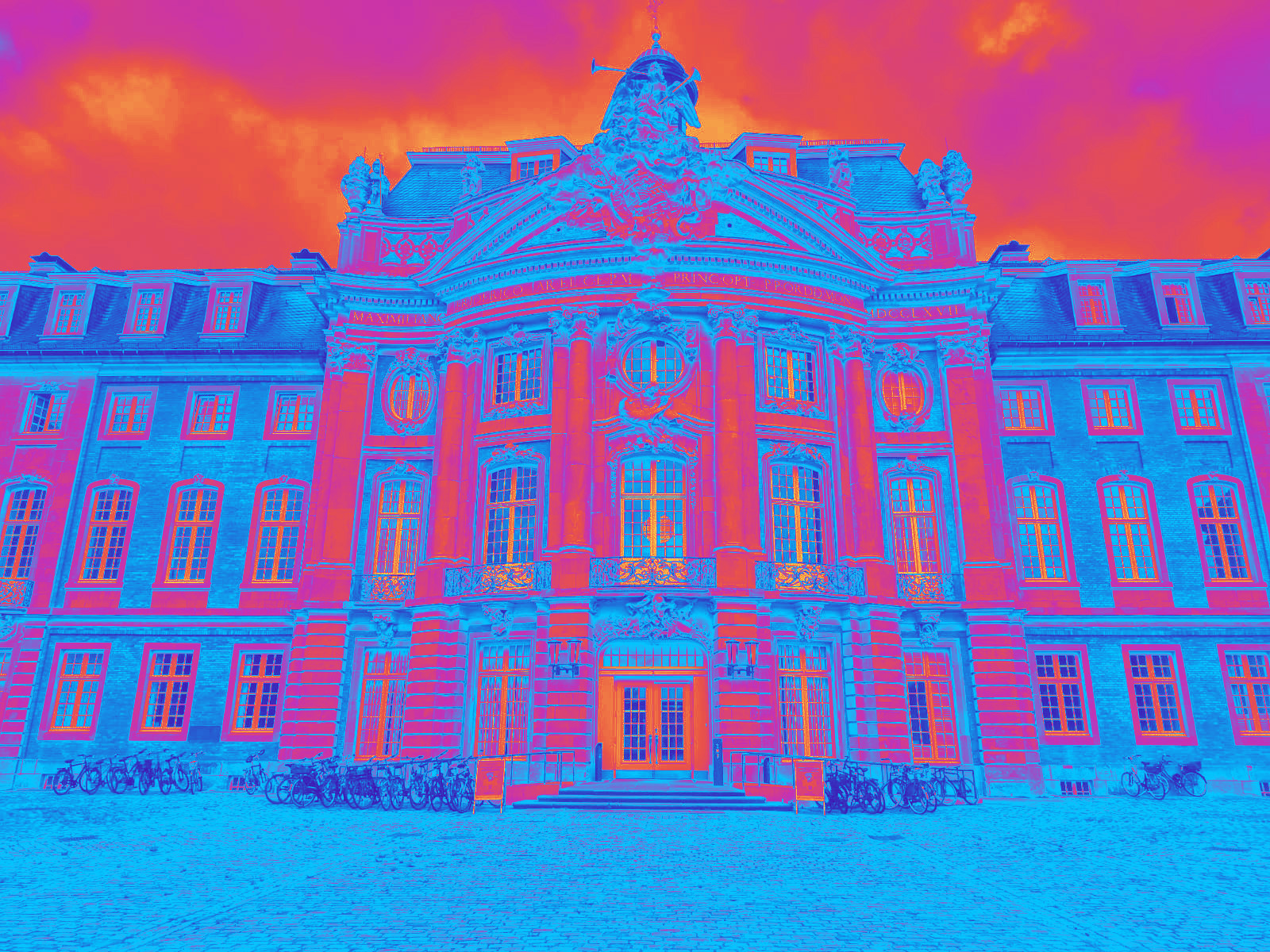
As part of ENPA’s Tracing the Interdisciplinary blog series, Merle Bartoldus revisits the latest ENPA conference in Münster to reflect on the different positions of psychologists and anthropologists and explore their transformative potential.
As an anthropology student, seminars and lectures have exposed me to the concepts of positionality and reflexivity across different ethnographic methods. Having had the opportunity to intern at this year’s ENPA 2025 conference in Münster, I was fascinated by how anthropologists and psychologists each approach or position themselves as subjects within their research. So, during the conference, I did some ‘detective work’ by observing the attitudes of the attendees toward ‘affective scholarship’, positionality, and the associated reflexive research methods (Stodulka et al. 2018: 521). I also examined the extent to which interdisciplinary perspectives can expand the definitions and methods of psychological anthropology familiar to me.
During my internship, I found that both disciplines tended to pursue distinct approaches to research on affect and emotion, yet they could also expand and complement each other. In contrast to the anthropologists, the psychologists present were rather cautious about the approaches and methodology of ‘affective scholarship’. They admitted that common anthropological methods such as the experimental labs offered were unusual for them.
However, this did not mean that the psychologists were not open to reflexive methods; participants criticized their own field, for instance, for a strong tendency to rationalize, homogenize, and ignore subjectivity. Finally, they also noted differences in the language used in the two disciplines: they said that anthropological terms such as ‘affective scholarship’ were often perceived as alienating, as was the mention of content warnings, which complicated interdisciplinary communication. In colloquial terms, it seemed that the psychologists suffered a ‘culture shock’.
On the other hand, it was noticeable that the vast majority of anthropologists present were familiar with reflexive methods and ‘affective scholarship’ and had incorporated them into their personal scholarly practice. Speakers often began their contributions by acknowledging their own bias and subjectivity. However, the attendees did not present a uniform or stable methodology for incorporating this into their research; rather, they had diverse, positioned, and personal practices.
Despite these noticeable differences, the participants quickly identified commonalities and opportunities for interdisciplinary collaboration. Attitudes toward the academic value of emotions have changed in both disciplines, and ‘affective scholarship’ has been radically rejected or problematized in the history of science and psychology. More recently, interdisciplinary collaboration between psychology and anthropology has proven to prevent both psychologically grounded biological determinism and anthropologically grounded cultural determinism, as the universality of concepts such as affects, emotions, and mental health is questioned. Breaking through disciplinary barriers also leads to the reflection and critique of Eurocentric values and epistemes. The attendees see an opportunity in interdisciplinary efforts to generate more public and political attention for anthropological findings through the prestige and hegemony of psychology.
In addition to ‘affective scholarship’ and reflexive, positioned knowledge construction, I was introduced to performative autoethnography. This method was developed at the intersection of anthropology and theatre studies and seeks to engage with the feelings and sensory perceptions of both the researcher and the research participants by performing these experiences and reflecting on them methodologically (Strauss 2017:1). It is used, for example, to deal with unpleasant and stressful feelings that arise in field research and to create personal clarity about the events (ibid.: 2). Researchers therefore describe this process as empowering or as a way to reclaim agency in a situation in which one previously felt powerless (Spry 2001: 711).
By re-embodying the experience, this method deals with the embodiment of knowledge in a positioned body (ibid.: 708 ff.). The self becomes the observed other, and one’s own positionality can be grasped and reflected upon from a new perspective (ibid.: 708, 725). The presentation of autoethnographic experiences thus becomes a space for self-criticism and should also encourage viewers to rethink their own biases and link their experiences with those portrayed by others (ibid.: 711). Performative autoethnographies should therefore be particularly emotionally engaging for the audience, hence they are also described as a “felt- text” (ibid.: 714).
During the ENPA, I encountered performative autoethnography in the form of a ‘performative lecture’, as part of the lab “Ethnographic Echoes: Accessing Embodied Knowledge through Artistic Methods in Anthropological Research”. The lecture on experiences of violence in the field began like a ‘conventional’ lecture, but then quickly and surprisingly broke with convention. The audience was arranged in a circle of chairs, and among us sat some involved in the lecture, which became apparent when they suddenly began to interrupt the presentation unexpectedly, for instance by yawning loudly, climbing on chairs, or making noises and comments that reminded me of catcalling. This behavior deliberately evoked unpleasant feelings in the audience so they could better relate emotionally to the presenters’ experiences. The lecture addressed topics such as positionality, one’s own role, and ethical responsibility in the field when facing and witnessing violence, and showed that artistic methods can be an effective way to personally reflect on embodied knowledge. The network members also contributed their own thoughts and texts from their research on violence. Each picked up one of the pieces of paper previously scattered on the floor and, at the same time as the others, read aloud a letter addressed to violence. These varied greatly in tone and content and were written in different languages: some sounded quiet and helpless, while from another corner a loud “fuck you, violence” rang out. Meanwhile, everyone was moving around, physically expressing their emotions. At the end of the performance, a poem about violence was played, accompanied by music, while all the performers left the room one by one. The audience was left alone with the last lines and sounds to reflect on what they had seen and linger in the uncomfortable atmosphere.
This performance had an emotionally powerful effect not only on me, but also on the scientists in attendance. While the anthropologists were already familiar with autoethnography and, if not with performative forms per se, then with experimental and artistic methods, the psychologists in attendance reacted with curiosity or bewilderment. Although the psychologists reported that they also experienced violence in the course of their research, it
would not feel appropriate for them to talk about it in an academic context. Some said they were inspired by reflexive methods in anthropology and wanted to integrate them into their future research practice. According to this view, anthropology might contribute to psychology’s ’emotional methodological literacy’. However, in the feedback round, everyone agreed that autoethnographic experiences are a valuable addition to traditional research methods, providing access to embodied knowledge that would otherwise be overlooked.
Looking back at my internship, I am not only thankful for an exciting academic opportunity, but also for the new voices and approaches to scholarship I was exposed to during the conference. In particular, I learned about autoethnography as a valuable and fascinating method for translating emotions and facilitating academic dialogue through performative autoethnography. Whether disturbing or fascinating, performative autoethnography, as I experienced it at the ENPA conference, offers a unique access to one’s own emotions and position as a researcher.
In conclusion, my experience at the ENPA conference demonstrates that the intersection of anthropology and psychology offers not only productive methodological tensions but also profound possibilities for epistemological expansion. The differing attitudes toward reflexivity, affect, and embodiment should not be understood as obstacles to collaboration, but as invitations to mutual learning. Anthropology’s long-standing engagement with positionality, ‘affective scholarship’, and autoethnographic methods can contribute to psychology’s ongoing self-critique by foregrounding subjectivity, embodiment, and ethical responsibility as integral to knowledge production. At the same time, psychology’s methodological rigor and institutional authority can help translate anthropological insights into broader public and political arenas. Advocating for interdisciplinary methodology at the intersection of anthropology and psychology, therefore, means more than combining tools from different fields; it requires cultivating an openness to epistemic discomfort, translation, and reflexive experimentation. As my internship experience suggests, it is precisely in moments of uncertainty, irritation, or fascination that new forms of scholarly understanding emerge. Interdisciplinary collaboration, especially when it takes affect and embodiment seriously, holds the potential to reshape how research is conducted, communicated, and felt – by researchers, participants, and audiences alike.
References
Spry, Tami (2001): “Performing Autoethnography: An Embodied Methodological Praxis”.
Qualitative Inquiry 7:6, pp. 706-732.
Stodulka, Thomas; Selim, Nasima and Dominik Mattes (2018): “Affective Scholarship: Doing Anthropology with Epistemic Affects”. Ethos 46:4, pp. 519-536.
Strauss, Annika (2017): “Experiments with Image Theatre: Accessing and Giving Meaning to Sensory Experiences in Social Anthropology”. Learning and Teaching 10:2, pp. 1-24.
Merle Bartoldus is a BA student of Cultural and Social Anthropology at the University of Münster. Her academic interests lie in queer and gender studies, as well as post-colonialism. Additionally studying English Language and Literature, they are interested in finding new interdisciplinary approaches and methodologies. She was part of the organizing committee of the ENPA conference 2025 in Münster.
Leave a Reply