In this post, Prof. Albert Piette shares two of his latest books. He argues for anthropology to reconnect with its apparent subject matter, human beings. If you would like to share your work, then write to us!
Dear colleagues,
I would like to inform you of the publication of two books that may be of interest to you. They are a continuation of my previous work, which seeks to reflect on, observe, and describe the uniqueness of each human being (see www. albertpiette.net).
The first book is called « Against Relationalism and the Tyranny of Context. Anthropological Ideas and the Volume of Being » (written with Catherine Beaugrand) (Paris, Naima Press, 2025) – See https://en.naimaeditions.com/library/against-relationalism-and-the-tyranny-of-context-paper/
Here is an abstract :
This book deals with anthropological ideas, which it confronts with what seems to be a difficulty in anthropology: the human being, each singular human being, taken in themselves. Following this line of reading, the authors take us from Benedict to Radcliffe-Brown or Strathern. They focus particularly on contemporary theories of ecological, psychological, phenomenological and existential anthropology. It is this last direction that the authors wish to emphasise, devoting a final chapter to what would be an anthropology of the human being. Radically critical of the relationalism and the tyranny of context in anthropological theories, this book combining text and drawings is a necessary document for researchers and students, as well as for all those interested in understanding the singularity of each being. Perhaps, after this book, readers will no longer consider anthropology in the same manner…
With the content :
Foreword
Chapter 1 – Understanding cultures
Culturalism
Anthropology and psychology
‘Local theories’: a reversal?
Chapter 2 – The tenacity of social relations
Sociological themes
The subjectivity argument and portraits
What about ethnography?
Chapter 3 – Being, existents, existence
Did you say “existent and existence”?
Anthropology and phenomenology
Anthropology and cognition
Life, lifeworlds and the individual
Chapter 4 – But what is an individual singularity?
From institutional anthropology to absolute anthropology
Extraction, volume of being and ligatures
Points of conclusion
Here is a long excerpt from the foreword:
This book is about the ideas of so-called social or cultural anthropology, the theoretical and conceptual matrices that have shaped it and continue to shape it. We will thus be confronted with several theories and several focal points: cultures or societies with their social relations, situations and interactions, cognitions, experiences, relations with the environment, and also existences and existents. To study beings ‘as’: this is the principle of theories, of the filtering that is intrinsic to them, as Francis Wolff has reminded us, and of its corollary, according to which each conceptualisation acts as if its ‘as’ were the whole of man. There would be a major principle of science: “for man to become the object of science, they must cease to exist as such”. Our debate with all these theoretical orientations will reveal that the anthropological ‘as’ designates beings insofar as they are in relation, and sometimes relations without beings – which may seem obvious to a social or cultural anthropologist. Taking the full measure of the ideas of social and cultural anthropology is a precondition for not reproducing their epistemological mechanism. This confrontation is thus a necessary step before learning to radically apprehend each ‘individual’, each ‘volume of being’ as we say, in their singularity, which is indeed that of an entity, not reducible to this or that component, with and in their functioning and structuring. That would be the topic, the very subject of anthropology: what exactly is individual singularity? How is each being, insofar as they are singular and thus constitute “a qualitative discontinuity against a certain continuous background”, in the words of the mathematician René Thom, stabilised and continuous in their singularity?
[…]
In all the ideas of anthropology, relationalism is in fact present in an undiscussed way. There is such obviousness of what is called ‘relation’ that it may seem difficult to put forward an alternative. Objections immediately arise: the very origin of a being, their education, the others, their necessity, their influence, social life at all times. Anthropology has used this obviousness extensively, perhaps excessively. This is normal, we might say, since it was and is intended to be social and cultural, seeking to explain through and with contexts, finding additional arguments in other metaphysics, in Marxism, in culturalism, in structuralism, in ecology, in philosophical texts, and also in a certain academic demagoguery.
What we do not want, which is always implied by relationalism:
– to put people together, as if glued to each other, or even inseparable from each other and the environment,
– to give contexts a great deal of weight,
– to add the ‘others’ around and next to the person being observed – if there is one,
– to choose themes that immediately indicate the relations to be studied,
– to reduce the individual as he or she is in such and such an interaction, such and such a role, such and such an activity, such and such an experience,
– to place a single being – granted a certain subjectivity and experiences – in situations chosen as specific, and to describe and analyse it through the prism of his or her relations, influence and tension with these situations,
– to create a disproportion between the consistency of a being, which is minimised, and what happens to them, which is emphasised, whereas the reality is the opposite,
– to consider the individual as malleable, affectable, affected, in a permanent process of becoming,
– to dislocate or eliminate being and keep only relations, processes and movements,
– to believe that the appropriate methodology is the relation between the observer and the people.
We think any form of relationalism is a way of circumventing, denying, avoiding, blunting the individual entities, of not considering them in their entirety. Relationalism does not necessarily imply practising all these points in the same research, even if several of them are often cumulative. So there are degrees of relationalist practice. But up to now no anthropology is exempt. We have to change rock and find, to be – or hope to be – more radical, to confront this individual being in all their details.
To be a non-relationalist necessarily means practising all the following points – of course, we will come back to them, but we think it is good for the readers to have them in mind:
– to concede, of course, that there are addresses to others and traces of others, but filtered and reappropriated in a consistency of being,
– to give others and contexts only a minimal descriptive and analytical role,
– to look at one being, one at a time, beyond specific situations, interactions or experiences, and follow him or her in a continuity that is as broad as possible – thus avoiding all usual topics of social sciences,
– to think of a being in terms of his or her internal structure and thus to value his or her consistency, rather than what happens to him or her,
– to think that the appropriate observation methodology does not require a strong relation with the observed.
That is what we want to attempt: a thematic or methodological ‘enclosure’ around the individual entity.
[…]
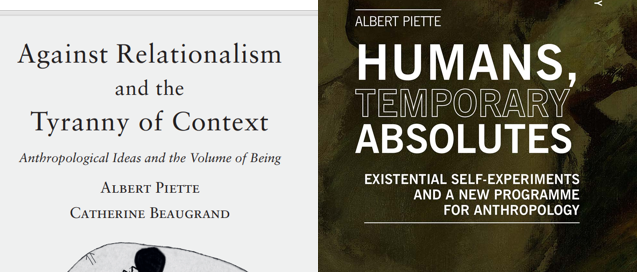
The second book is called « Humans, temporary absolutes. Existential self-experiments and a new programme for anthropology » (Mimesis International, 2026) : https://mimesisinternational.com/humans-temporary-absolutes-existential-self-experiments-and-a-new-programme-for-anthropology/
Here is an abstract :
Albert Piette chose to “note”, regretting that he was not an artist who could express “time”. As an anthropologist, he has transformed his fear of time into acts of noting that have become central to his own work. His father, his daughters’ childhoods, the moments of a day and his experience of a blocked nose are “noted”. The author’s main aim is to show how, on the basis of such daily notes on his own life, it is possible to carry out anthropology. In so doing, he debates with artists, philosophers and anthropologists. Above all, he offers a radically different perspective on anthropology as a theoretical reflection on the “resistance” of being – the absolute being – from which he draws out the elementary laws of functioning. The book concludes with proposals for an ethics of noting as an antidote to violence.
With the content :
Foreword. Reverberations. Albert Piette’anthropology of separation
Anthony Feneuil
Introduction
Chapter 1. Moving into the past
Sheets of mourning and the volume of being
Chronography of grief
Chapter 2. Keeping the present
Childhood notebooks
Rhythm and sequences of actions
Minimality and the human being
Interlude. One day
Chapter 3. Absolute being
Instases – not ekstases
The laws of volume as an absolute being
Volume of being, anthropology and metaphysics
Chapter 4. Stuffy nose. Dynamics between feelings and a concept
I have somatized my concept…
The reinforced concept
Tragedy, pathos
Coda: anthropology and psychoanalysis
Postscript. Taking notes on beings: an ethics of daily life
Anthropo-analysis: four services
On love
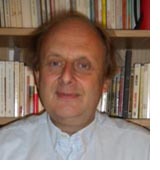
Albert Piette is Professor of Anthropology at the University of Paris-Nanterre and Researcher at the Centre for Ethnology and Comparative Sociology (CNRS). He is the author of books in French and English about anthropological theory, methodology of details, religious phenomena, and especially existential anthropology. For more information: www. albertpiette.net
Leave a Reply